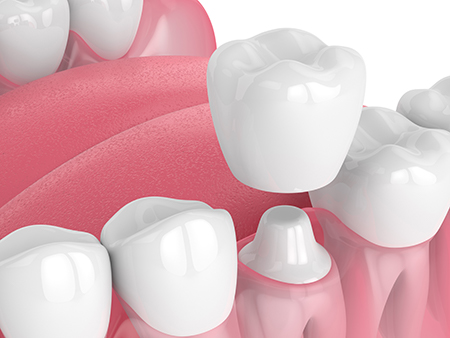
Ceramic Crowns

At Lookout Mountain Family Dentistry, we combine modern dental technology with a patient-centered approach to restore smiles that look natural and perform reliably. Our team focuses on clear explanations, comfortable care, and using materials that balance longevity with a lifelike appearance.

Even though tooth enamel is incredibly hard, teeth remain susceptible to decay, fractures, and wear over time. For many situations where a simple filling won’t provide lasting strength or protection, a full-coverage crown is the recommended solution to rebuild form and function while preserving the surrounding tooth structure.

Recent advances in dental ceramics have made metal-free crowns a dependable choice for both front and back teeth. These restorations can match the translucency and shade of natural enamel while offering the durability needed for everyday chewing and biting.

We tailor every treatment plan to each patient's unique needs — considering function, cosmetics, and long-term oral health — so you understand the reasons behind recommending a ceramic crown and what to expect from the process.

When a crown becomes the best solution

A crown is a protective cap placed over a tooth to restore strength, protect damaged structure, and improve appearance. Dentists recommend crowns when a tooth has suffered extensive damage that a filling cannot adequately repair, or when added protection is needed after certain treatments.

Deciding whether a crown is the right option involves evaluating how much natural tooth remains, how the tooth functions in your bite, and your aesthetic goals. Our team balances these factors to recommend a restoration that supports long-term dental health.

Crowns are also the preferred option when a tooth needs full coverage to prevent further fracture, when a large filling has compromised tooth integrity, or when a tooth serves as a critical support for a bridge or implant restoration.

  • To rebuild a tooth with significant decay or structural loss that weakens chewing performance

  • To replace or protect a very large or failing filling

  • To restore and cap an implant post so the replacement tooth functions like a natural one

  • To serve as the anchor teeth (abutments) for a traditional dental bridge

  • To reinforce a tooth after endodontic (root canal) therapy

  • To cosmetically improve the shape, size, or color of a misshapen or discolored tooth

  • To correct or stabilize bite-related problems that place excessive stress on a single tooth

A woman sits in a dental chair receiving dental care from a professional, with a smiling expression on her face.

Advantages of metal-free ceramic crowns

All-ceramic crowns offer a blend of aesthetic refinement and biocompatibility. Unlike restorations that use a metal substructure, contemporary ceramic crowns can replicate the way light passes through natural enamel, producing a lifelike result especially important for visible front teeth.

Modern dental ceramics are formulated to be strong and wear-resistant, which means you can expect a restoration that performs well for years when cared for properly. Because these crowns are metal-free, they avoid the dark lines at the gumline that sometimes occur with porcelain-fused-to-metal restorations.

For patients with metal sensitivities or who prefer a fully ceramic option, these crowns reduce the risk of irritation and can be gentler on surrounding soft tissues. They are also resistant to staining and are designed to maintain their shade and surface characteristics over time.

Below are the practical benefits that make all-ceramic crowns a popular choice for many restorative needs:

  • Natural translucency and luster that closely mimics real teeth

  • Conservative tooth preparation possible with thinner restorations in many cases

  • Lighter weight compared to restorations with metal frameworks

  • Gentler interaction with the gums and surrounding tissues

  • High resistance to surface stains and discoloration

  • An excellent option for patients with metal allergies or sensitivities

  • A seamless appearance without a visible metal margin at the gumline

The image shows a close-up view of multiple teeth, with some appearing to be intact while others have gaps or missing parts, set against a pink background that resembles gum tissue.

What to expect during your crown treatment

Preparing for a ceramic crown typically involves a few steps designed to preserve tooth structure while ensuring a precise fit. During your initial appointment, the tooth is examined and prepared by gently removing any compromised material and shaping the remaining tooth to accept the crown.

To create an accurate model of the prepared tooth, we may use digital scanning technology or traditional impressions. These records capture the contours of your bite and the exact position of neighboring teeth so the final crown integrates comfortably and functions naturally within your mouth.

While the permanent crown is being fabricated, a temporary restoration protects the prepared tooth and maintains proper spacing. Once the lab or in-office milling unit completes the final crown, it is carefully tried in, adjusted for fit and color match, and then permanently bonded or cemented into place.

After placement, we provide guidance on caring for your new crown, including safe chewing practices during the initial healing period and routine oral hygiene to maximize longevity. Regular dental checkups allow us to monitor the crown, the supporting tooth, and surrounding tissues to ensure continued success.

Choosing the right ceramic material for your smile

Not all ceramic crowns are identical — the choice of material depends on the tooth's position, the forces it must withstand, and the aesthetic result you want to achieve. Front teeth typically prioritize translucency and lifelike color, while back teeth often require additional strength to handle chewing loads.

Our team assesses each case to recommend the most appropriate ceramic option. We take into account the thickness needed for strength, how well the material mimics adjacent teeth, and any bite considerations that could influence long-term wear.

Below are commonly used ceramic materials that offer a range of aesthetic and functional benefits:

  • Lithium disilicate porcelain — prized for its balance of translucency and strength, often used for front or premolar crowns

  • Leucite-reinforced pressable porcelain — excellent for highly esthetic cases where a delicate, natural appearance is desired

  • Solid (monolithic) zirconia — extremely strong and suitable for posterior teeth where durability is paramount

  • High-translucency zirconia — combines improved esthetics with robust strength for cases that require both attributes

Selecting the right material is a collaborative decision between you and the clinical team. We explain the advantages of each option and recommend a solution that aligns with your functional needs and cosmetic expectations.

A family of four enjoying a moment together on a couch, with the father holding a remote control.

Why trust Lookout Mountain Family Dentistry for ceramic crowns

Our practice emphasizes precision, comfort, and outcomes that both look and feel natural. We remain current with material science and digital workflows so we can offer restorations that meet modern standards for appearance and performance.

From thorough diagnostic exams to careful color matching and meticulous placement, our approach centers on long-term oral health. We work with skilled dental technicians and leverage in-office tools when possible to streamline care and maintain quality control throughout the restoration process.

Patients can expect straightforward explanations of treatment options, attention to detail during every appointment, and follow-up guidance to protect their investment in oral health. Our goal is to craft solutions that support daily function, smile confidence, and long-term durability.

In summary, ceramic crowns provide a versatile, esthetic, and biocompatible way to restore teeth that are weakened, fractured, or cosmetically compromised. If you would like to learn more about whether a ceramic crown is the right option for your smile, please contact us for more information.

Frequently Asked Questions

How does a crown differ from a filling?

+

While a dental filling is designed to replace a portion of a decayed or damaged tooth, a dental crown offers full coverage to restore the tooth’s entire outer surface. A well-fitting dental crown not only protects and strengthens the underlying tooth structure, but it also restores the tooth’s appearance and function.

What's the procedure for getting an all-ceramic crown?

+

The procedure for getting an all-ceramic crown is much like the procedure for getting any other type of crown. In all cases, the tooth needs to be prepared, an impression taken, and a permanent crown cemented into place. A single all-ceramic crown can typically be fabricated over the course of two visits. However, with CAD/CAM technology, a same-day crown can be fabricated from start to finish in a single visit. With the first approach, a temporary crown is typically worn until the second visit, when the permanent restoration is placed. As with every treatment plan, our office will explain your best options in care.

What's the difference between a temporary crown and a permanent crown?

+

As the name implies, a temporary crown is only worn for a short time until the permanent crown is placed. A temporary crown is typically fabricated from durable tooth-colored dental acrylics. While designed to protect the underlying tooth between appointments, and until your new permanent crown gets placed, a temporary crown is also fabricated to look like a natural tooth and maintain the look of your smile.

Will my tooth feel any different?

+

While you should feel better having an attractive and functional tooth to restore your smile, your tooth may feel a little sensitive following treatment. This initial sensitivity will subside. We take great care to make sure your new restoration looks great, fits well, and your bite is perfect. However, we’re always happy to make any minor adjustments to ensure your comfort.

Does a tooth that has had a root canal procedure need a crown?

+

With some exceptions, teeth with root canal procedures are typically restored and protected from further damage with a full-coverage crown. Based on what’s best for your smile, our office will recommend the most appropriate restoration to maintain the health and longevity of your tooth following a root canal procedure.

How do I take care of my new crown?

+

A dental crown is a long-term restoration that, if properly cared for, can serve you well for many years to come. Once your new crown is placed, it requires the same brushing, flossing, and periodic checkups as your natural teeth. Avoid biting your fingernails and chewing on hard or sticky objects such as ice, pencils, or taffy, which can damage or loosen your crown. Remember, clenching and grinding your teeth puts excessive pressure on both natural teeth and dental restorations. Unless treated, this habit can compromise the longevity and integrity of your dental work, including crowns.

Does a crown protect my tooth from cavities and gum disease?

+

Although your new all-ceramic crown restores the tooth's strength, form, and function, you can still develop dental disease in the absence of proper care. To prevent gum disease and tooth decay, it’s essential to brush and floss as instructed and see our office for routine checkups, cleanings, and care.

How long do all-ceramic crowns last?

+

How long a dental crown lasts depends on various factors, including your level of oral care, diet, and oral habits. While the standard answer is that dental crowns can last anywhere from 5 to 15 years, existing literature confirms that most dental crowns remain in place at 15 to 20 years.

How much do all-ceramic dental crowns cost?

+

At the office of Lookout Mountain Family Dentistry, we strive to provide the highest quality of care to address all your dental needs. Once we’ve had the opportunity to examine your smile, we can give you a clear picture of any dental issues that are present, along with a quote for how much treatment will be. The cost of dental crowns can vary a little, depending on the type of crown and its location. Our goals are to provide the highest quality of care and help patients begin treatment without additional financial stress or delay. We’re always happy to answer all your questions on dental insurance coverage, available financing, and payment plans.

Does dental insurance cover all-ceramic crowns?

+

Coverage for all-ceramic crowns depends on your dental insurance plan. Today, many dental plans provide some level of coverage for all-ceramic crowns. At the office of Lookout Mountain Family Dentistry, we work with patients to optimize their dental benefits and get the care they need to maintain healthy and beautiful smiles!


What are ceramic crowns and how do they differ from traditional crowns?

+

Ceramic crowns are full-coverage restorations made entirely from dental ceramics designed to restore the form, function and appearance of a damaged tooth. Unlike crowns that use a metal substructure, all-ceramic restorations reproduce the translucency and color of natural enamel for a more lifelike result. They are suitable for both anterior and many posterior teeth depending on the chosen ceramic material and the forces involved.

Modern ceramics such as lithium disilicate and zirconia offer a balance between esthetics and strength that was not available in earlier porcelain materials. Advances in material science and digital workflows allow these crowns to be fabricated with precise fits and consistent shade matching. Your dentist will explain the differences so you can choose the best option for your bite and cosmetic goals.

When is a ceramic crown recommended instead of a filling?

+

Dentists typically recommend a crown when a tooth has suffered extensive decay, a large failing filling or a fracture that undermines structural integrity. Crowns also protect teeth that have undergone root canal therapy or that act as abutments for bridges and implant restorations. The decision is based on how much natural tooth remains, the tooth's role in your bite and the desired cosmetic outcome.

If a simple filling cannot reliably restore strength and function, a crown restores occlusal form and prevents further damage. Your clinician will assess neighboring teeth, bite dynamics and long-term prognosis to recommend ceramic crowns only when they support durable oral health. Conservative tooth preparation and modern ceramic options often preserve more tooth structure than older restorations.

What types of ceramic materials are used for crowns?

+

Common ceramic materials used for crowns include lithium disilicate, leucite-reinforced pressable porcelain and various grades of zirconia, each offering distinct properties. Lithium disilicate is known for its translucency and is frequently chosen for front and premolar crowns where esthetics are paramount. Leucite-reinforced ceramics provide a delicate, natural appearance for highly cosmetic cases.

Monolithic zirconia provides exceptional strength for posterior teeth and patients with heavy bite forces, while high-translucency zirconia balances improved esthetics with robust durability. Material selection depends on required thickness, opposing dentition and the need to mimic adjacent tooth color and translucency. We will review these considerations with you to select the ceramic that best meets functional and aesthetic priorities.

What should I expect during the crown treatment process?

+

Crown treatment typically begins with a diagnostic exam, radiographs and discussion of materials and goals, followed by tooth preparation to remove compromised tooth structure. Digital scans or traditional impressions capture the prepared tooth and bite relationships to guide fabrication. A temporary crown protects the tooth while the final restoration is made, whether in a dental laboratory or with an in-office milling unit.

When the permanent crown is ready, the dentist will check fit, occlusion and color match before cementing or bonding it in place. You may notice minor sensitivity or changes in biting feel for a short period as your mouth adapts to the restoration. Follow-up visits allow us to fine-tune occlusion and ensure the crown and surrounding tissues remain healthy.

Are ceramic crowns durable enough for back teeth that handle heavy chewing?

+

Ceramic crowns can be extremely durable in posterior positions when the correct material is chosen and the restoration is properly designed. Solid zirconia and high-strength lithium disilicate are commonly used for back teeth because they resist fracture and wear under heavy chewing forces. The success of a posterior ceramic crown depends on accurate occlusal design, sufficient material thickness and proper cementation technique.

In some high-stress situations, dentists may recommend monolithic zirconia to minimize the risk of chipping or breakage while preserving chewing efficiency. Regular dental exams and good oral hygiene help detect and address any wear or opposing tooth concerns early. With appropriate case selection and maintenance, many ceramic crowns perform reliably for years.

How should I care for a ceramic crown to maximize its lifespan?

+

Caring for a ceramic crown is similar to caring for a natural tooth and includes daily brushing with a soft-bristled brush and flossing to maintain healthy gum tissue. Avoiding excessively hard or sticky foods and using nonabrasive toothpaste reduce the chance of surface wear or accidental damage. Wearing a nightguard is recommended for patients who grind or clench their teeth to protect crowns from undue stress.

Routine dental checkups and professional cleanings allow the team to monitor crown margins, surrounding gums and the condition of opposing teeth. If you notice persistent sensitivity, looseness or a change in bite, contact your dental office promptly for evaluation. Timely attention to minor issues can prevent more extensive repairs and extend the restoration's service life.

Can ceramic crowns be used with dental implants or as part of a bridge?

+

Ceramic crowns are commonly used to restore implant posts and to serve as abutments in conventional bridges when aesthetics and biocompatibility are priorities. Implant-supported ceramic crowns are designed to connect to the implant abutment and restore occlusion and appearance much like a natural tooth. When used in bridges, ceramic crowns on the abutment teeth must be planned carefully to distribute forces evenly across the prosthesis.

Material choice and connection type are especially important for implant restorations to ensure proper fit, screw access and long-term durability. Your dentist and lab technician collaborate to produce crowns that match adjacent teeth while maintaining the mechanical properties needed for function. Regular maintenance and evaluation of the implant and surrounding tissues are essential to the success of implant-supported ceramic crowns.

Are ceramic crowns safe for patients with metal sensitivities?

+

Because ceramic crowns are metal-free, they are an excellent option for patients with known allergies or sensitivities to metals. All-ceramic restorations reduce the risk of galvanic reactions and eliminate visible metal margins at the gumline, improving both comfort and appearance. Ceramics also tend to be biocompatible and well tolerated by surrounding soft tissues.

If you have a history of allergic reactions to dental metals, inform your dentist so material selection can be tailored to your needs. The team will review options and choose a ceramic that meets aesthetic goals while avoiding materials that could provoke a reaction. In most cases, patients with metal sensitivities experience successful outcomes with contemporary ceramic crowns.

How does digital technology like CEREC or in-office milling affect crown treatment?

+

Digital technology such as CEREC scanners and in-office milling enables precise digital impressions and rapid fabrication of ceramic crowns, often reducing the number of appointments required. Digital workflows capture accurate 3D models of the prepared tooth and adjacent occlusion, which improves fit and reduces the need for adjustments. Same-day milling can produce a well-fitting ceramic crown in the office, allowing immediate placement when clinically appropriate.

At Lookout Mountain Family Dentistry we use digital imaging to streamline treatment planning and enhance color matching for predictable esthetic outcomes. This integrated approach also facilitates communication with dental laboratories when lab-fabricated crowns are preferred for complex cases. Whether crowns are milled in office or made by a skilled technician, digital data improves consistency and quality control throughout the restoration process.

Why should I trust the practice for ceramic crowns?

+

Patients should choose a provider that combines clinical experience, up-to-date materials knowledge and careful attention to occlusion and color matching. Our team follows evidence-based protocols, partners with experienced dental technicians and uses modern digital tools to ensure precise results. Clear explanations, detailed diagnostics and conservative tooth preparation are central to achieving durable, natural-looking crowns.

Lookout Mountain Family Dentistry has offered comprehensive restorative care in Phoenix for over 30 years and emphasizes patient comfort and long-term oral health in every treatment decision. We discuss material options, expected outcomes and necessary follow-up care so you can make an informed choice about ceramic crowns. If you have questions about whether a ceramic crown is right for your smile, our team can provide a personalized evaluation and clear treatment plan.

Hours of Operation

Monday
8:00 am - 5:00 pm
Tuesday
8:00 am - 5:00 pm
Wednesday
8:00 am - 5:00 pm
Thursday
8:00 am - 5:00 pm
Friday
8:00 am - 5:00 pm
Saturday
Closed
Sunday
Closed