

If your dentist recommends a root canal, try not to worry — this treatment is a well-established way to stop pain and preserve a tooth that would otherwise be lost. With modern instruments and techniques, root canal therapy is generally no more uncomfortable than receiving a filling, yet it can prevent the need for extraction and help maintain your natural smile for years to come.
At the office of Lookout Mountain Family Dentistry, we focus on precise, compassionate care that keeps patient comfort front and center. Our team combines up-to-date technology with thoughtful attention to each patient's needs so you can move through treatment confidently and with as little stress as possible.
Keeping your natural tooth whenever possible has benefits that extend beyond appearance. A preserved tooth helps maintain proper bite alignment, supports chewing efficiency, and prevents neighboring teeth from shifting. Root canal therapy removes the infected or damaged tissue inside a tooth while leaving the surrounding structure intact — protecting both function and facial support.
Root canal procedures have a strong track record of success when performed and restored correctly. Because treated teeth can often be restored and continue to function for many years, choosing treatment over extraction is frequently the best option for long-term oral health. Preserving the tooth also simplifies future restorative choices and often avoids more invasive solutions.
Our approach emphasizes conservative treatment: we remove only the tissue that needs to be eliminated and restore the tooth so it can withstand daily use. Patients benefit from reduced overall treatment time, fewer appointments for replacement teeth, and the comfort of keeping their own tooth whenever feasible.

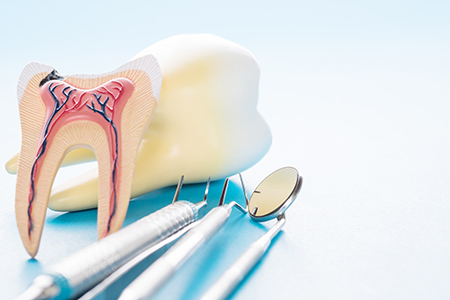
Every tooth contains a central chamber that houses the dental pulp — a network of connective tissue, tiny blood vessels, and nerve fibers. While the pulp is essential during tooth development, a fully mature tooth can remain healthy and functional even after the pulp is removed when necessary. Problems arise when decay, cracks, or trauma allow bacteria to reach this inner chamber.
Once bacteria reach the pulp, inflammation or infection can follow. That process commonly causes the symptoms patients notice: sensitivity to hot or cold, a persistent ache, or pain when biting down. In some cases the nerve dies quietly and the tooth darkens or shows radiographic signs of change before pain becomes obvious.
Not every sore or sensitive tooth needs a root canal, but when the pulp is irreversibly inflamed or infected, root canal therapy is the treatment that eliminates the source of the problem while preserving the remaining tooth structure.
Some warning signs are unmistakable: a deep, lingering pain when you bite or sip hot or cold beverages, or a toothache that interrupts sleep. Other indicators are subtler — a tooth that looks darker than its neighbors, tenderness with touch or chewing, or localized gum swelling. Any of these symptoms should prompt an evaluation so an appropriate plan can be made.
Occasionally a tooth in need of treatment produces little or no pain, which is why routine dental exams and diagnostic X-rays are so important. Routine imaging can reveal hidden problems at the root end or signs of chronic inflammation before an urgent situation develops. Early detection often makes treatment simpler and more predictable.
Delaying care can allow infection to spread, increasing the risk of bone loss around the root or the development of an abscess. If you notice persistent symptoms or a visible change in a tooth’s color or position, seek assessment promptly to protect the tooth and surrounding tissues.

Today’s root canal procedures use refined instruments and techniques to make treatment efficient and comfortable. After isolating the tooth, the clinician carefully removes the diseased pulp, cleans and shapes the canals, and then seals them with a biocompatible filling material. Most treatments are performed under local anesthesia so patients feel minimal discomfort during the appointment.
The complexity of a root canal varies by tooth: molars often have multiple canals and more intricate anatomy, which can require additional time or appointments. When needed, we offer sedation options to help patients remain relaxed throughout treatment. Your provider will discuss the best approach for your situation and answer any questions before starting.
Once the internal work is complete, the tooth is protected with a temporary or permanent restoration. In many cases a crown is recommended to restore strength and prevent fracture, particularly for back teeth that endure heavy biting forces. Proper restoration after the root canal is a critical step in securing the long-term success of the treated tooth.
After treatment, it's normal to have some tenderness in the area as surrounding tissues heal. Numbness from local anesthesia will wear off in a few hours, and mild soreness can usually be managed with over-the-counter medications as recommended. If your dentist prescribes antibiotics for an active infection, be sure to complete the course exactly as directed.
While a temporary filling is in place, the treated tooth is more vulnerable to fracture, so patients are advised to avoid chewing hard or sticky foods on that side of the mouth. Returning for the final restoration — often a crown — is important to restore full function. The permanent restoration helps prevent reinfection and gives the tooth the structural support it needs.
With careful home care, routine dental visits, and timely restoration after treatment, a tooth that has had root canal therapy can last for many years — even a lifetime. If you notice persistent pain, swelling, or any concerning changes after treatment, contact the office promptly so we can evaluate and address the issue.
Lookout Mountain Family Dentistry is committed to guiding patients through treatment with clear explanations and gentle care. If you have questions about root canal therapy, are experiencing dental pain, or would like to learn whether a tooth can be saved, please contact us for more information and to schedule an evaluation.
A root canal procedure is the best way to save a tooth that has been damaged by decay or injury and preserve your natural smile. The alternative is an extraction and treatment to replace the tooth. While at times a tooth is non-restorable and an extraction is the only option, when possible, it’s best to try and save your natural tooth. With proper care, a tooth with root canal therapy can serve your smile well for many years to come.
Despite lingering myths from before the age of modern dental anesthesia and technology, having a root canal procedure today is as routine and comfortable as visiting the dentist for a filling. While the procedure is performed under local anesthesia with your tooth completely numbed, we can also discuss options in dental sedation.
Whether the symptoms of a dental infection subside after a course of antibiotics, a draining abscess provides you with some temporary pain relief, or a tooth with radiographic evidence of pathology has not yet developed symptoms, it’s essential, before an infection worsens or occurs, to have a root canal procedure performed. In this way, the tooth can be disinfected, filled, and sealed to protect your health and avoid further problems.
If you have sustained a dental injury, have a toothache, jaw pain, swelling, or are experiencing any other unusual and uncomfortable oral symptoms, contact our office immediately for care. Dental problems that have not been evaluated and treated can significantly worsen, producing more severe damage and consequences for the involved teeth, your oral health, and even your overall wellbeing. Once you get in touch with our office, our friendly and compassionate office team will get you in for care at your earliest convenience.
While some root canal procedures can be completed in one visit, others may involve 2 or 3 appointments. How long it takes depends on various factors, including active infection, the number of canals in the tooth, and the tooth’s location or anatomy.
With a success rate that exceeds 95%, root canal therapy remains the most effective procedure to save a tooth in which the inner vital tissues have been damaged. However, as with all healthcare procedures, there are a small percentage of cases where the teeth become symptomatic a second time. The good news is that many of these teeth can still be saved with root canal retreatment or a minor surgical procedure known as an apicoectomy.
The best ways to maintain a tooth with root canal therapy are to get the proper restoration required to rebuild and protect the tooth, maintain proper oral hygiene, and schedule appointments for routine dental checkups and care.
Saving a tooth with root canal therapy is a wise investment that, in the long run, is typically less costly and invasive than having the tooth extracted and replaced with a fixed bridge or implant. As far as the exact cost of care, it can vary depending on which tooth is being treated. Many dental insurance plans provide coverage for root canal therapy. At the office of Lookout Mountain Family Dentistry, we do our best to optimize your dental benefits and minimize your out-of-pocket expenses. Our staff will answer all your questions about the cost of care and discuss all your payment options.
At the office of Lookout Mountain Family Dentistry, we use the latest technology and most effective methods of care to provide precise and gentle care. Our reputation for excellence is based upon a consistent record of achieving successful treatment outcomes while providing prompt, stress-free, and convenient treatment for every type of dental need.
A root canal is a dental procedure that removes infected or irreversibly damaged pulp from inside a tooth to eliminate pain and stop the spread of infection. The treatment preserves the remaining tooth structure so the tooth can continue to function for chewing and maintaining proper bite alignment. Modern root canal therapy focuses on thorough cleaning, shaping, and sealing of the canal system to protect the tooth long term.
With advances in instruments, imaging, and materials, root canal therapy is predictable and often avoids the need for extraction. The goal is to remove the source of inflammation while leaving as much healthy tooth structure in place as possible. When indicated, this conservative approach supports both function and facial support over time.
Common signs that may indicate a root canal is needed include a persistent toothache, sensitivity to hot or cold that lingers after the stimulus is removed, pain when biting, or swelling around the affected tooth. Some teeth become discolored or show radiographic changes before pain develops, which is why regular exams and X-rays are important. Not every sensitive tooth requires a root canal, but these symptoms warrant a prompt clinical evaluation.
During an exam your dentist will perform tests such as percussion, bite assessment, and pulp vitality checks and will take diagnostic images to determine the extent of infection or damage. In some cases additional imaging like CBCT helps clarify complex anatomy or the presence of abscesses. Early assessment often makes treatment simpler and improves the likelihood of a successful outcome.
Most root canal procedures are performed under local anesthesia so patients experience little to no pain during the appointment. Modern techniques and anesthetic protocols make the procedure comparable to receiving a large filling for many people. Your clinician will check for comfort throughout treatment and adjust as needed to minimize discomfort.
After the appointment it is normal to have some tenderness as surrounding tissues heal, and this is usually controlled with over-the-counter anti-inflammatory or analgesic medications as directed. If swelling, fever, or increasing pain occur after treatment, contact the office so the situation can be reassessed. Prompt follow-up helps identify complications early and allows timely management.
The procedure typically begins by isolating the tooth and applying local anesthesia, followed by creating a small access opening to reach the pulp chamber. Diseased pulp tissue is removed and the root canals are cleaned, shaped, and disinfected before being filled with a biocompatible material to seal the space. The clinician then places a temporary or permanent restoration to protect the tooth until final restoration can be completed.
The complexity of the appointment depends on the tooth involved; molars often have multiple, curved canals that require extra time and care. When necessary, sedation options are available to help patients remain relaxed during longer procedures. After the internal work is finished, your dentist will recommend the appropriate final restoration to restore strength and prevent fracture.
Immediately after treatment avoid chewing on the treated tooth until the final restoration is placed, as temporary fillings are more vulnerable to fracture. Maintain good oral hygiene by brushing and flossing carefully around the area to support healing and prevent new decay. Follow any specific postoperative instructions provided by your dentist, including completing a prescribed antibiotic course when indicated.
Returning for the recommended final restoration, often a crown on back teeth, is important to restore full function and reduce the risk of reinfection or fracture. Continue regular dental checkups and professional cleanings so the treated tooth and surrounding tissues can be monitored. With proper care and timely restoration, a tooth treated with root canal therapy can remain functional for many years.
Although root canal therapy has a high success rate, reinfection can occur if bacteria remain in untreated areas, if the restoration fails, or if the tooth fractures and allows contamination. Complex canal anatomy or missed accessory canals can make complete disinfection more challenging, which is why thorough cleaning and appropriate imaging are important. Timely placement of a durable final restoration reduces the risk of reinfection.
If symptoms recur, your dentist will evaluate the tooth with clinical tests and radiographs to determine the cause and whether retreatment or endodontic surgery is necessary. Retreatment can remove previously placed filling material and address missed anatomy, while apical surgery addresses persistent problems at the root tip. Early detection and prompt management improve the chances of saving the tooth.
Crowns are commonly recommended after root canal therapy, especially for posterior teeth that endure high biting forces, because treated teeth can become more brittle and are at greater risk of fracture. A crown restores the tooth’s shape, function, and appearance while protecting it from reinfection and mechanical failure. Your dentist will evaluate the amount of remaining tooth structure and the tooth’s location to determine whether a crown is the best long-term option.
In some cases, smaller anterior teeth with minimal structural loss may be restored with a well-designed filling or onlay instead of a full crown. The timing of the final restoration should be coordinated so the tooth is protected as soon as clinically appropriate. Maintaining a strong, well-sealed restoration is a key factor in the lasting success of root canal therapy.
Preserving a natural tooth with root canal therapy helps maintain proper bite alignment, chewing efficiency, and the natural contour of the jaw, which supports facial structure. When a tooth is extracted, replacing it typically involves additional procedures such as a bridge, removable partial denture, or implant to restore function and appearance. Each replacement option has different clinical considerations and may require treatment of adjacent teeth or the jawbone.
Whenever feasible, conserving the natural tooth simplifies future restorative choices and often reduces the overall invasiveness of care. Your dentist will discuss the prognosis for saving the tooth versus extraction and replacement based on clinical findings, imaging, and your long-term oral health goals. A carefully planned approach helps ensure the most predictable and functional outcome.
Yes, several sedation options can help patients remain comfortable and relaxed during root canal therapy, ranging from nitrous oxide (laughing gas) to oral sedatives and, in some settings, intravenous sedation. Nitrous oxide provides mild relaxation with rapid recovery and is often used for patients with mild to moderate anxiety. Oral or IV sedation may be appropriate for those with greater anxiety or for longer, more complex procedures.
The office offers sedation dentistry and will review medical history and patient comfort to recommend the safest, most effective approach. Pre-procedure instructions and monitoring during treatment help ensure a calm experience and a smooth recovery. Discuss your concerns with the dental team so a personalized sedation plan can be arranged when needed.
Evaluation begins with a thorough clinical exam, diagnostic X-rays, and, when indicated, three-dimensional CBCT imaging to assess canal anatomy, bone support, and the presence of infection or resorption. Your dentist will evaluate restorability by looking at remaining tooth structure, periodontal health, and the feasibility of achieving a durable final restoration. Pulp testing and bite assessments also help determine the extent of pulpal damage.
Prognosis depends on factors such as the degree of infection, root anatomy, previous treatment, and the ability to place a long-term restoration. The dental team will explain expected outcomes, outline treatment steps, and recommend the most conservative plan that meets your functional and esthetic needs. If root canal therapy is appropriate, a tailored treatment strategy is developed to maximize the chance of a successful, lasting result.
